Whole House Water Filter vs. Reverse Osmosis: Which System Is Right for Your Home?
Quick Summary: Whole house water filters treat every tap, shower, and appliance in your home by filtering water at the point of entry. Reverse osmosis systems produce high-purity drinking water at a single faucet by removing dissolved solids, heavy metals, and contaminants down to the micron level. Both address chlorine, sediment, and disinfection byproducts found in water across Hagerstown, Harrisonburg, Ruckersville, and the Salem/Roanoke area. The right choice depends on your water quality goals, budget, and whether you need whole-home coverage or point-of-use purification — or both.
Whole House Water Filter vs. Reverse Osmosis at a Glance
Choosing the right water filtration system for your home depends on your water quality, household size, and what you want filtered out. Whole house water filters and reverse osmosis (RO) systems are two of the most popular options, and each one solves a different problem. A whole house water filter treats every gallon entering your home, while an under-sink reverse osmosis system focuses on producing high-purity drinking water at a single faucet. Whether you live in Hagerstown, Harrisonburg, Ruckersville, or the Salem/Roanoke area, Culligan Stoner can help you find the right fit for your home.
In this guide, we explain how both systems work, compare the pros and cons of each option, and help you decide which water filtration system best fits your home and lifestyle.
How a Whole House Water Filter Works
A whole house water filter, also called a point-of-entry (POE) system, installs on your main water line so it filters all water entering your home. By the time water reaches your faucets, showers, washing machine, or water heater, it has already passed through several stages of filtration.
A typical whole house water filter system includes:
- Sediment filtration to remove sand, rust, and silt
- Activated carbon filtration to reduce chlorine, chloramines, and unpleasant tastes and odors
- Specialty filter media for issues like iron, manganese, hydrogen sulfide, or volatile organic compounds (VOCs)
- An optional whole house water softener system to address hard water minerals like calcium and magnesium
- An optional UV disinfection stage with a UV lamp to neutralize bacteria and viruses
Whole house systems are sized to match your household’s water usage and incoming water pressure, so every fixture gets clean, filtered water without affecting flow.
How Reverse Osmosis Works
Reverse Osmosis is one of the most advanced water treatment technologies available. Using a semi-permeable membrane, RO systems force tap water through filtration layers that remove dissolved minerals, volatile organic compounds (VOCs), and other water contaminants such as chlorine, arsenic, lead, fluoride, and Polyfluoroalkyl substances (PFAS).
The process reduces total dissolved solids (TDS) to extremely low levels, creating bottled water quality straight from your faucet, without the plastic waste or cost.
A typical reverse osmosis drinking water filtration system includes:
- Sediment filtration to remove sand, rust, and silt
- Activated carbon filtration for chlorine and taste
- A reverse osmosis membrane for contaminant removal (at the micron level)
- Post-carbon filtration to polish taste
- A storage tank and pressure booster pump to maintain steady water pressure
- An optional remineralization filter to re-mineralize water for ideal taste and pH balance
All Culligan Stoner RO units meet or exceed NSF/ANSI 42 and NSF/ANSI 53 standards for filtration performance, ensuring your family receives clean, safe, great-tasting water.
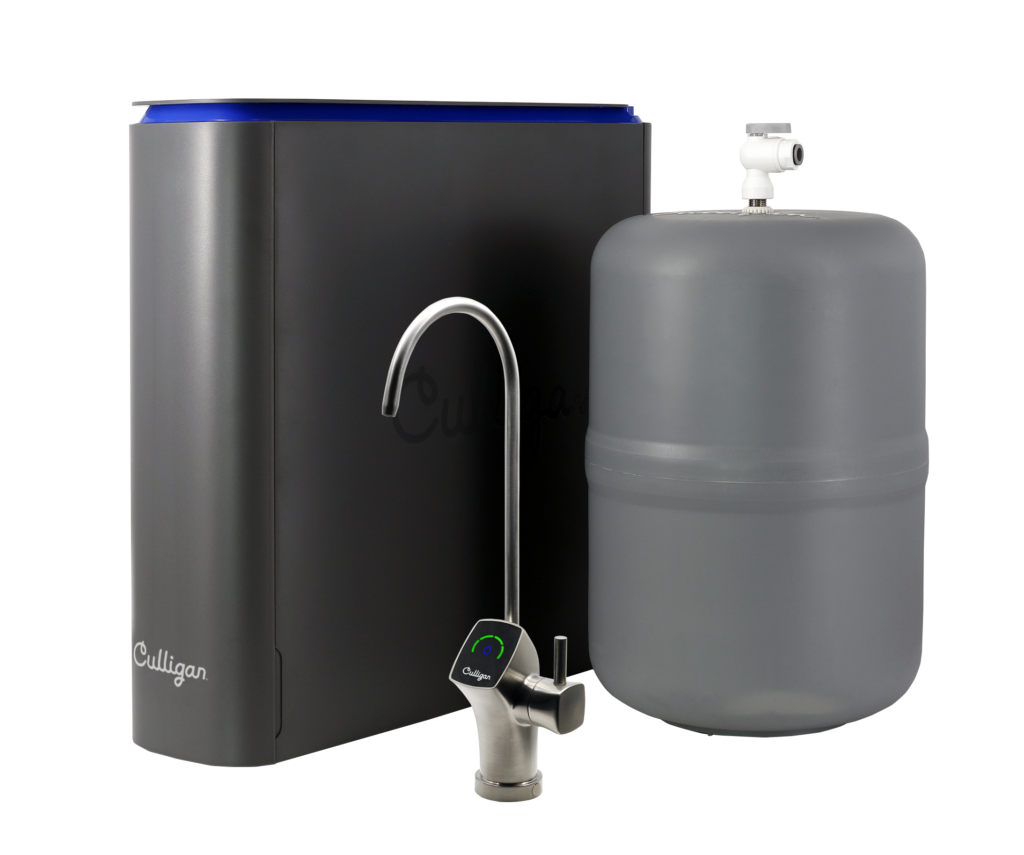
Whole House Water Filter vs. Reverse Osmosis: Key Differences
Both systems improve water quality, but they are built for different jobs. Here is how they compare on the factors that matter most:
- Coverage: A whole house water filter treats every tap, shower, and appliance. A reverse osmosis system focuses on a single point of use (usually the kitchen faucet).
- Contaminant removal: Whole house filters target sediment, chlorine, chloramines, and chemical contaminants throughout the home. Reverse osmosis removes those plus dissolved solids, heavy metals, fluoride, PFAS, and many trace contaminants.
- Installation: A whole house system installs at the main water line and requires more space and plumbing. An under-sink RO unit fits neatly under most kitchen cabinets.
- Cost: Whole house systems are a larger upfront investment. Under-sink RO systems are more affordable and faster to install.
- Maintenance: Both systems require routine filter cartridge and membrane replacement for optimal performance. Whole house filters have larger media beds and longer service intervals, while RO membranes are smaller and replaced more often.
- Water pressure: Whole house systems are sized to maintain household water pressure. RO systems use a storage tank and pressure booster pump to keep flow steady at the tap.
Whole House Water Filter Pros and Cons
Advantages
- Treats every gallon of water entering your home
- Reduces hard water minerals, disinfection byproducts, and inorganic contaminants when paired with a softener
- Protects plumbing, water heaters, and appliances from scale buildup and corrosion
- Removes chlorine taste, sediment, and organic compounds for improved water quality throughout the home
- Cleaner showers, softer laundry, and longer-lasting fixtures
Considerations
- Requires professional installation and adequate space for tanks and media
- May not remove every dissolved contaminant (such as fluoride or some heavy metals) without an additional RO stage
- Includes routine filter media replacement for optimal performance
Culligan Stoner’s whole house water filtration systems often combine carbon filtration, a whole house water softener system, and optional UV disinfection to deliver premium protection. Culligan of Hagerstown and Culligan of Harrisonburg frequently recommend whole house solutions for homes dealing with chlorine disinfection byproducts and moderately hard water common in both service areas.
Reverse Osmosis Pros and Cons
Advantages
- Produces high-quality drinking water right at the tap
- Removes contaminants down to the micron level, including PFAS, lead, arsenic, and dissolved solids
- Compact RO unit fits neatly under most kitchen cabinets
- Quick installation and simple maintenance
- Provides an eco-friendly alternative to bottled water
Considerations
- Only treats water at one point of use (usually the kitchen) unless a whole house RO is installed
- May produce some water waste during the filtration cycle (a normal part of osmotic pressure balance)
- Removes beneficial minerals along with contaminants, though optional remineralization filters address this
- Not designed to treat whole-home issues like hard water or sediment
Culligan Stoner’s under-sink RO systems use high-efficiency RO membranes, filter life monitoring, and optional remineralization filters to re-mineralize water for ideal taste and pH balance. Culligan of Ruckersville and Culligan of Salem/Roanoke often recommend RO systems for homeowners who want point-of-use purification on top of their existing whole house treatment.
Common Water Quality Concerns Both Systems Address
Tap water across the Culligan Stoner service area meets federal regulations, but municipal water in Hagerstown, Harrisonburg, Ruckersville, and the Salem/Roanoke region still contains a range of contaminants worth understanding:
- Disinfection byproducts such as Haloacetic acids (HAA5) and Total Trihalomethanes (TTHMs), which are present in measurable levels across all four service areas
- Hard water minerals (calcium and magnesium) that affect plumbing and appliances, with Harrisonburg water averaging 66 mg/L hardness
- Chlorine and chloramines used for disinfection, ranging from 0.87 ppm to 2.7 ppm depending on the water system
- Trace levels of lead, with Ruckersville water showing elevated readings in some sample sites
- Manganese, which has been detected in Salem/Roanoke area water
- Dissolved solids and organic matter from surface water sources including the Potomac River, Rapidan River, Roanoke River, Dry River, and North River
Homes on private wells face additional concerns like iron, hydrogen sulfide, nitrates, and bacteria. The right filtration setup depends on your specific water source and what is in it.
How to Choose Between a Whole House Filter and Reverse Osmosis
When deciding between whole house water filtration and reverse osmosis, consider:
- Your water quality goals: Full-home contaminant removal vs. drinking water only
- Available space and plumbing: Whole house systems require more room and professional setup
- Budget and maintenance: Under-sink RO systems are more affordable and compact upfront
- Hard water issues: Add a water softener system if hardness is your main concern
- Household size: Larger families may benefit from both systems working together
- Source water: Well water often needs a whole house approach, while city water can sometimes be addressed with reverse osmosis at the kitchen alone
Culligan Stoner can perform on-site water testing to analyze your home’s total dissolved solids, chlorine levels, hardness, and disinfection byproducts, then recommend the right filtration technology for your household.
Culligan of Hagerstown, Culligan of Harrisonburg, Culligan of Ruckersville, and Culligan of Salem/Roanoke all offer free in-home water testing for homeowners across the service area.
Can You Use Both? Why Many Homeowners Combine Them
You do not have to pick just one. Many homeowners install a whole house water filter to handle sediment, chlorine, and hard water across the home, then add an under-sink reverse osmosis system at the kitchen for ultra-pure drinking and cooking water.
This combination delivers the best of both technologies:
- Cleaner water for showers, laundry, and appliances
- Bottled water quality at the kitchen tap
- Longer life for plumbing and fixtures
- A more efficient filtration setup overall, since the whole house system pre-filters the water reaching the RO membrane
Environmental Benefits of Home Water Filtration
Both whole house and reverse osmosis systems help eliminate dependence on bottled water, reducing plastic waste and transportation emissions. While the RO process produces a small amount of water waste, modern filtration materials, efficient RO membranes, and remineralization options minimize loss while improving water taste and pH balance.
By upgrading to a home filtration system, homeowners enjoy consistent safe drinking water, better-tasting beverages, and long-term protection for their home and health.
Frequently Asked Questions
What does reverse osmosis remove? Reverse osmosis removes up to 99% of total dissolved solids, including lead, arsenic, fluoride, nitrates, chlorine, PFAS, microplastics, and many other contaminants. The semi-permeable RO membrane filters water at the micron level.
Is reverse osmosis water good for you? Yes. RO water is some of the purest drinking water available at home. Some homeowners add a remineralization filter to re-mineralize water for ideal taste and pH balance.
How much does a reverse osmosis system cost? Cost varies depending on system size, configuration, and installation. Culligan Stoner offers RO systems from $37 to $60 per month, including the compact Aquasential Tankless RO ($37/month) and the flagship Aquasential Smart RO ($60/month) with Wi-Fi connectivity and filter life monitoring. Culligan Stoner also offers rental, financing, and purchase options to fit different budgets.
How do I choose a whole house water filter? Start with a water test. The right whole house water filter depends on your source water, household size, water pressure, and which contaminants you want to remove. A water specialist can match the system to your specific situation.
Does a whole house water filter remove fluoride? Most whole house water filters do not remove fluoride on their own. If fluoride removal is a goal, pair your whole house system with a reverse osmosis unit at the kitchen tap.
Which Water Filter Is Right for You: Reverse Osmosis or Whole House?
- Choose a Whole House Water Filter if you want every tap in your home to deliver filtered water free of sediment, chlorine, and contaminants, and you want to protect your appliances from hard water and scale buildup.
- Choose a Reverse Osmosis System if you want a point-of-use purification system for drinking and cooking water that removes the widest range of contaminants right at the kitchen tap.
- Choose Both if you want full-home protection plus bottled water quality on demand.
Not sure where to start? Culligan Stoner can help. Serving Hagerstown, Harrisonburg, Ruckersville, and the Salem/Roanoke area, our water specialists will test your water, explain your filtration options, and guide you through installation with professional precision and clear instructions. Contact Culligan of Hagerstown, Culligan of Harrisonburg, Culligan of Ruckersville, or Culligan of Salem/Roanoke to schedule your free in-home water test today.