
Why Well Owners Across Four States Choose Culligan Stoner
Our systems are second to none. The real advantage is that we make treating well water simple.
-
Two Completely Different Water Problems, And The Rock Decides Which One You Have
We serve two geologies that behave like opposites. The valley floors, meaning the Hagerstown Valley, the Cumberland Valley around Chambersburg, Berkeley County and the Shenandoah Valley, sit on limestone. The USGS characterizes water from those carbonate aquifers at roughly 280 mg/L hardness, about 16 grains, with a median pH of 7.5. Head east into the Blue Ridge and Piedmont toward Charlottesville, or southwest to Roanoke, Salem and Bedford, and the rock turns crystalline. The same USGS work puts that water near 63 mg/L, under 4 grains, with a median pH of 6.7. That is soft water that eats copper instead of scaling it. One dealership, one set of technicians, and water four times apart depending on which side of the ridge you live on. Those are regional aquifer figures rather than a survey of houses, which is exactly why we test yours before we recommend anything.
-
Four States. Four Sets Of Rules. None Cover What Matters.
We cross four state lines and the rules change every time. Pennsylvania has no statewide construction or siting standards for private water wells at all. The state’s own Department of Conservation and Natural Resources says so, licenses the drillers, and then notes that the license does not imply the driller knows proper well construction practice, concluding that protection of a private well is the homeowner’s responsibility. Maryland is the strictest of the four: before a well is approved as a potable supply it needs two consecutive bacteria-free samples at least a day apart, compliance with the nitrate limit, and a turbidity check. West Virginia requires a permit and a licensed driller, but the completion sampling rule only kicks in when a setback variance was granted. Virginia requires one bacteria sample after the well is disinfected, and nothing after that. No nitrate, no chemistry, nothing at resale. Now the part that matters to you: not one of those four states tests for hardness, iron, manganese or pH. Those are the things that ruin a water heater, and no state on our map has ever looked at them in your well.
-
Expert Installation, And We Maintain It
Culligan has been in water treatment for more than 85 years and it’s all we do. Your local Culligan delivers, installs, and maintains the system for you, so there’s no shipping damage, no unboxing, no guessing about install location, and no third-party service line when it needs attention. Schedule an appointment, then enjoy the water.
-
Make Your Water Work For You
On the fence about whether you need treatment? These are the returns that pay a system off over time.
- Over $437 a year saved on soaps, shampoos and detergents in soft water
- Over $115 a year in gas water heater energy savings
- Up to 50% more life out of dishwashers and washing machines
- No more replacing fixtures and plumbing that hard or corrosive water ruined early
Local Resources
Well Water Across Our Four States
How Hard Is Well Water
In The Valley?
On the limestone, hard enough that the contrast with town water is almost comic. USGS work on the carbonate aquifers underneath the Hagerstown, Cumberland and Shenandoah Valleys puts hardness near 280 mg/L, roughly 16 grains per gallon. Meanwhile Chambersburg draws its municipal supply from the East Branch of the Conococheague Creek and reports hardness around 10 ppm, about half a grain, soft enough that the borough adds soda ash to bring the pH up. Harrisonburg, pulling from the Dry River and the North River, averages 66 mg/L and calls its own water moderately hard. So a homeowner outside Chambersburg on a limestone well can be running water thirty times harder than the same town’s tap. Surface water in town, groundwater in the county, and nobody blends yours. Statewide sampling of Pennsylvania private wells put the southcentral region, which covers Chambersburg, Greencastle and Waynesboro, at a mean of 120 to 140 mg/L, so the range is wide even on one side of the ridge.
Why Is My Water Eating
My Pipes?
Low pH, and this is the crystalline half of our territory. Soft water with a median pH of 6.7 is aggressive toward metal plumbing, which is where the blue-green staining and the metallic taste come from. The most useful number on this comes from a study of 701 private wells across Pennsylvania: 18 percent tested below pH 6.5, but earlier work cited in the same report found 59 percent were corrosive to metal plumbing. Your pH reading understates the problem by about three times. The consequence showed up in the same study as lead above the standard in 12 percent of wells statewide and 17 percent in the southcentral region, leached out of household plumbing rather than the ground. Manganese belongs to this side too. USGS found it above the health benchmark of 300 micrograms per liter in 15 percent of samples from the Valley and Ridge shale and sandstone aquifers, which is Salem, Blacksburg, Christiansburg and Daleville country. Correcting pH is a different job from softening, and on a corrosive well it comes first.
Should I Be Testing For
Bacteria And Nitrate?
Yes, and on the limestone side more than anywhere. Water moves fast through karst, along fractures and solution channels instead of filtering slowly through sand, so what happens on the surface reaches a well quickly. The USGS sampled 50 wells in the limestone aquifers of Berkeley County, West Virginia, and found bacteria of at least one type in 64 percent of them, E. coli in 32 percent, and no treatment at all on two thirds of the contaminated wells. Deep wells were not spared: total coliform rates were similar at depth, though the highest E. coli readings came from shallow wells. The Pennsylvania survey of 701 private wells found total coliform in 33 percent and E. coli in 14 percent, with DNA tracking pointing mainly at animal sources. Nitrate is the quieter one. An analysis of roughly 19,000 private well samples across Virginia found about 6 percent above 5 mg/L and 1.3 percent above the 10 mg/L limit, with Rockingham County heading the list of counties over the limit. That is poultry country, and the authors note their figures undercount because the sampling is voluntary.
TREATMENT OPTIONS
Three Problems, Three Fixes For
Your Well
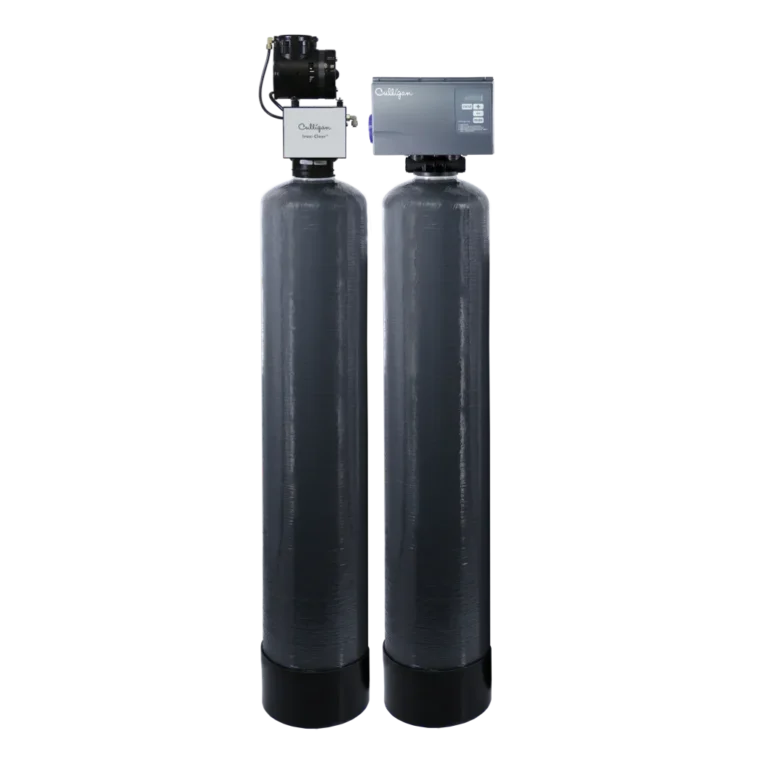
Iron & Manganese Filtration
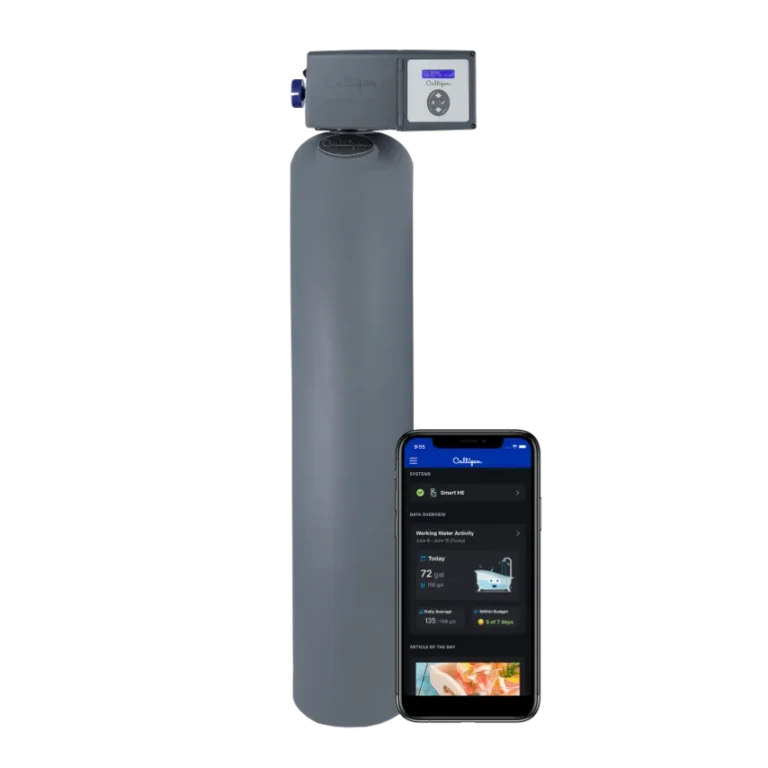
Water Softening
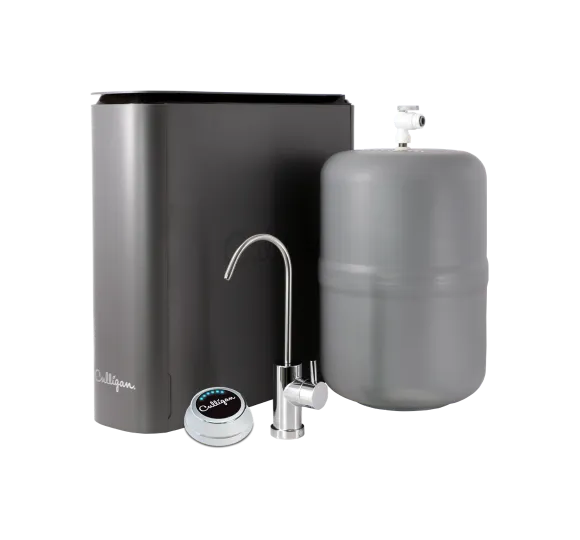
Drinking Water Systems
The Proof
Why Do Homeowners TRUST Our
Water Treatment Systems?
I was with another water company for 19 years but they constantly raised their prices and failed to deliver the water. So it was time for a change and one I do not regret. Candy at Culligan has been a great help and the water is every bit as good as what my prior company provided. I am happy I made the change and look forward to 19 or more years with Culligan.

Even though it’s a bigger business you still get the small business customer service. I’ve never had any complaints with anyone that I’ve dealt with from my regional office. I recommend them to all my friends looking for a water softener. They’ll even deliver the salt and load it in your drum for you!
Culligan is always quick to get back to me when I have a need. They also send out reminders for normal maintenance and upkeep which is nice because I never remember to keep ahead of those things. I have not had a problem yet in the 2.5 years I have been a customer with them.
Scale? Blue-Green Stains? Bacteria?
Find Out What's Really
In Your Well Water!
• Fast on-site results, no mailing
• We test hardness, iron, manganese and pH
• Flexible sample pickup options

Frequently Asked Well Water Treatment Questions
We Have Answers
Does Pennsylvania require anything of my well?
Almost nothing, and the state says so itself. Pennsylvania has no statewide construction or siting standards for private water wells. There is no state permit and no required test. The one state requirement is that the driller hold a license from the Department of Conservation and Natural Resources, and DCNR is candid that the license does not imply the driller knows proper drilling or well construction practice. Its own conclusion is that protecting and maintaining a private well is the homeowner's responsibility. A handful of counties and municipalities have written their own ordinances, so it is worth asking locally.
What about Maryland?
Maryland is the strictest of our four states, and it is still a one-time check. Before a well is approved as a potable supply, state regulation requires two consecutive samples free of coliform bacteria collected at least 24 hours apart, compliance with the nitrate limit, and a turbidity standard. Your county health department is the approving authority and can require more where it has reason to think something else is present. After approval, nothing recurring is required.
And Virginia?
One bacteria sample. Virginia's private well regulation requires a bacteriological sample collected after the well has been disinfected and flushed, before the well goes into use. No nitrate, no chemical analysis, nothing over the life of the well, and nothing required when a property is sold. Virginia is a buyer-beware state on well water, so if you are buying a house on a well, testing is on you.
And West Virginia?
A permit from your local health department and a licensed driller, both required before drilling, modifying or abandoning a well. The completion sampling rule, two samples for total coliform and E. coli, applies where a variance from the setback requirements was granted rather than to every well. Your local health department will run a voluntary test for a fee, which is worth doing.
So what does any of that cover?
Bacteria, nitrate and turbidity, once, in the states that ask for anything at all. Not one of the four requires a test for hardness, iron, manganese or pH. Those are what scale a water heater, stain a tub, corrode copper and shorten the life of every appliance you own, and no state on our map has ever looked at them in your well.
Why is my well water so much harder than town water?
Because town water here is usually river water and your well is limestone groundwater. Chambersburg treats water from the East Branch of the Conococheague Creek and reports hardness around 10 ppm, about half a grain. Harrisonburg blends the Dry River and the North River and averages 66 mg/L. USGS puts the carbonate aquifers under these valleys near 280 mg/L, roughly 16 grains. Hard water is a groundwater problem, and the cities here mostly do not drink groundwater.
My water is soft but it stains everything blue-green. What is that?
Copper, pulled out of your own plumbing by acidic water. That is the signature of the crystalline rock east and southwest of the valley, where the median pH runs about 6.7. A study of 701 Pennsylvania private wells found 18 percent below pH 6.5, but earlier work cited alongside it found 59 percent were corrosive to metal plumbing. The pH number understates it badly. Same study: lead above the standard in 12 percent of wells statewide and 17 percent in the southcentral region, all of it from plumbing rather than the aquifer. A blue-green stain is a plumbing bill waiting to happen, and neutralizing the pH is the fix.
Do I need a softener if my water is already soft?
No, and this is where the two halves of our territory need different answers. Soft acidic water needs pH correction, not softening. Adding a softener to water that is already soft solves nothing and leaves the corrosion running. On the limestone side the reverse is true. A test settles it in half an hour, and our blog post on whether well water needs a softener walks through the reasoning.
How common is bacteria in wells around here?
More common than most people expect, and more so on the limestone. The USGS sampled 50 wells in the limestone aquifers of Berkeley County, West Virginia and found at least one type of bacteria in 64 percent of them and E. coli in 32 percent. Two thirds of the contaminated wells had no treatment on them. The Pennsylvania study of 701 private wells found total coliform in 33 percent and E. coli in 14 percent, and DNA source tracking pointed mainly at animal sources rather than septic systems.
My well is deep. Doesn't that protect me?
Less than you would hope in karst. In that Berkeley County study, total coliform showed up at similar rates in shallow and deep wells. What depth did change was severity: the highest E. coli and fecal coliform concentrations came from the shallow wells. Water moves through limestone along fractures and solution channels rather than filtering through sand, so depth is not the barrier it is in other kinds of rock.
Should I test for nitrate?
Yes, and more so if you are near poultry houses, dairy or orchards. An analysis of roughly 19,000 private well samples across Virginia found about 6 percent above 5 mg/L and 1.3 percent above the 10 mg/L limit, with Rockingham County at the top of the list of counties exceeding it. Albemarle, Roanoke, Montgomery, Page and Shenandoah counties all appear in the 5 to 10 mg/L group. The authors are clear that those numbers undercount, because the sampling is voluntary rather than systematic.
What about radon in well water?
It is a real finding in the crystalline rock, with a caveat attached. USGS reported that water from nearly one in four drinking water wells sampled in the Piedmont and Blue Ridge crystalline aquifers exceeded 4,000 picocuries per liter. That threshold is a proposed alternative standard rather than an enforced limit, EPA has never finalized a radon rule for drinking water, and the wells in that network were a mix of household and public supply. It is worth a separate lab test if you are on crystalline rock, and it is not something we would sell you a system for without one.
Is there arsenic or uranium in wells here?
Nothing in the data we can find supports making that claim for this footprint. The Pennsylvania survey found arsenic above the standard in 2 percent of private wells, concentrated in the northern part of the state rather than our end of it. No uranium figures exist for this region that we could source. We would rather tell you that than put a scare on a page.
Will my water taste salty after a softener is installed?
No. A properly functioning water softener will never make your water taste salty. The small amount of sodium added is far too little to create a salty taste.
How does a water softener work?
Through ion exchange. As it removes the calcium and magnesium that make water hard, it replaces those ions one for one with sodium. The amount added is proportional to how hard your water is, and in most cases it isn't a significant contributor to the sodium in your diet.
Will a softener reverse damage already done to my appliances?
Yes. Once a softener is installed it begins removing the scale that hard water built up. It takes a long time to clear, but it will clear.
How often do I need to add salt?
Modern softeners recharge based on how much water you use and how hard it is. Most of our customers add salt once or twice a year, and on 16 grain valley water a system works harder than on softer mountain water.
How long does installation take?
Most residential systems install in a few hours in a single visit. We deliver the equipment, install it, and set it up, so there's nothing for you to unbox or assemble.
We're buying a house on a well. What should we do?
Test before you close, because no state we operate in will do it for you and Virginia has no disclosure requirement at sale at all. At minimum get bacteria and nitrate, and add hardness, iron, manganese and pH so you know what treatment the house needs before you own it rather than after.
Where should I get started?
Every recommendation we make starts with knowing what is in your water. The test is free, it happens at your house, and it takes about half an hour. You'll get your numbers explained in plain language and an honest answer about whether you need treatment at all.

Facebook